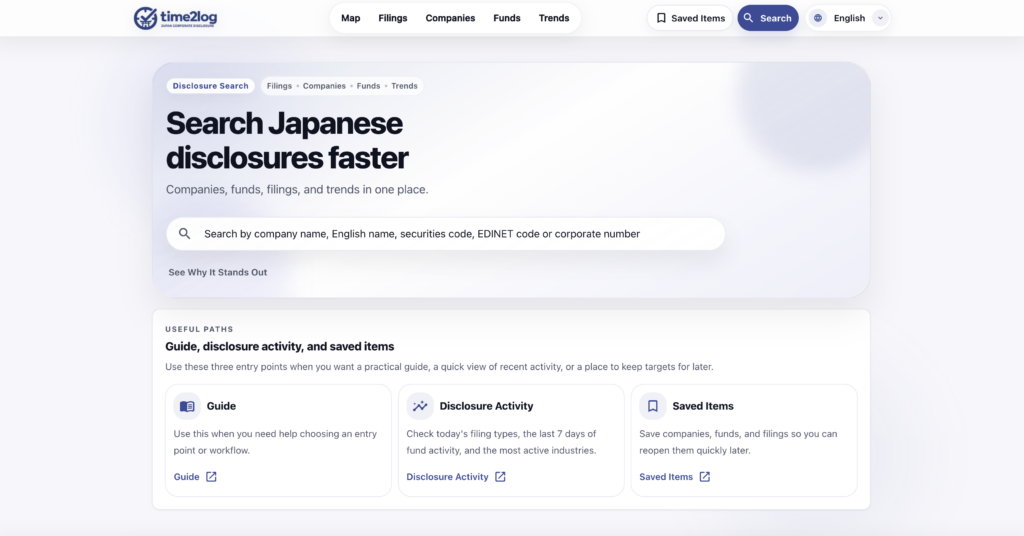
Disclosure Search is a Japanese disclosure information multilingual search platform designed to help users explore companies, funds, documents, and trends through a single entry point. Its homepage highlights the idea of making Japanese disclosure information easier to find, while also showing support for PDF, XBRL, CSV, and interfaces in Japanese, English, and Chinese.
When working with Japanese public disclosure data, the real challenge is often not whether the information exists, but how fragmented the process can be. Company information, fund data, disclosure documents, file types, and trend tracking are often split across multiple paths. Even when users already know a company name, a code, or a related filing, they may still need to jump between pages, repeat searches, and re-check file availability. That is why Disclosure Search is worth attention: it organizes scattered Japanese disclosure information into a more connected and practical workflow, making the process not only searchable, but also easier to follow and reuse. The site’s About page explains that the service aims to organize public data distributed across official sources such as EDINET and provide a more user-friendly search interface.
What is Disclosure Search?
Disclosure Search is a service built to make Japanese listed company filings and related public information easier to search and compare. According to its About page, financial information on Japanese companies is spread across official platforms such as EDINET, which can make search and comparison inefficient. Disclosure Search presents itself as an effort to organize that public data into a more accessible interface. The site also states that it supports Japanese, English, and Chinese interfaces.
If you want to understand the platform at a glance, it is useful to start with the Disclosure Search homepage and the Why choose.
Why this Japanese disclosure information multilingual search platform stands out
The strength of Disclosure Search is not simply that it displays data, but that it appears to be designed around real working flows. The homepage presents companies, funds, documents, and trends as connected entry points, and also introduces helpful access points such as a guide, disclosure trend summaries, and saved items. These are not just convenience features. They make the service feel more suitable for recurring professional use, where users often need to move from one object to another without losing context.
You can explore these related pages here:
Main features of this Japanese disclosure information multilingual search platform
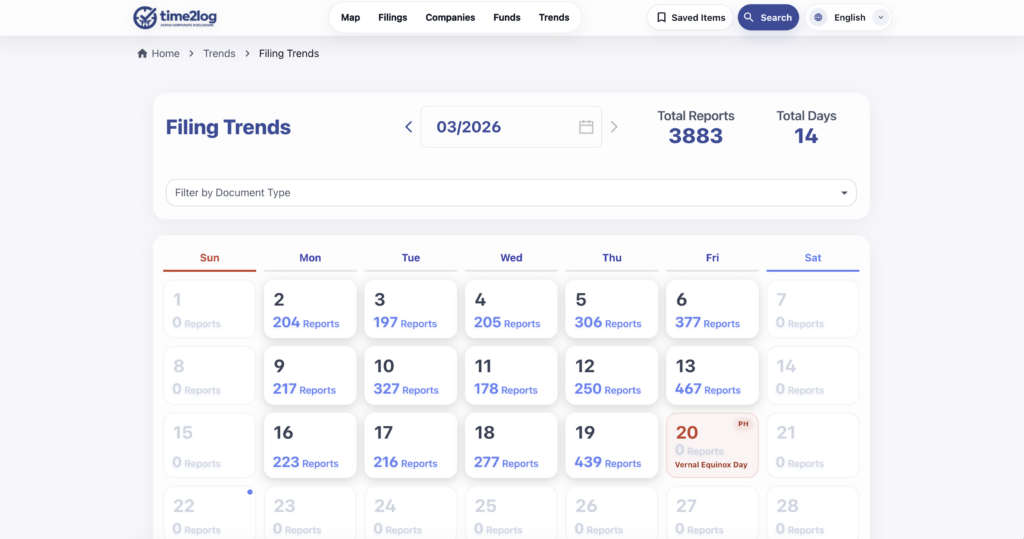
A unified view of companies, funds, documents, and trends
The homepage places disclosure documents, company information, fund information, and disclosure trends within one service structure. This matters because it reduces the need to constantly decide where to begin each time you research something. Whether you are starting with a company name or exploring recent disclosure activity, the workflow remains more connected.
Multilingual interface support
Disclosure Search supports Japanese, English, and Chinese. That makes it easier for international users, multilingual teams, and non-Japanese researchers to work with Japanese public disclosure information. Language support can make a major difference in how quickly a user can understand a platform and continue using it.
Support for PDF, XBRL, and CSV
The homepage clearly lists PDF, XBRL, and CSV as supported file types. That is especially useful for users who do not stop at reading headlines or summaries, but need to inspect underlying files, process structured data, or archive source materials for later analysis.
Helpful paths for onboarding and continued use
The platform also includes a Guide, Insights, and a saved-items function. These features suggest that Disclosure Search is not only meant for one-time lookup, but also for continued tracking and repeated work with disclosure information.
Map-based company discovery
The site also provides a company map entry point. This adds a geographic perspective to disclosure research and may be useful when users want to explore filing companies by area rather than only by text search.
View the company map
Who may benefit most from Disclosure Search?
Disclosure Search is particularly relevant for the following users:
- investment researchers following Japanese companies and funds
- finance, audit, and compliance professionals reviewing disclosure-related materials
- teams conducting Japanese market research or company background checks
- multilingual or cross-border teams that want a clearer way to access Japanese public filing data
Its organization around Japanese listed company financial information, multilingual support, and more connected navigation make it especially practical for these professional use cases.
Useful alongside official sources
The value of Disclosure Search is not that it replaces official disclosure platforms, but that it helps users navigate distributed public information more efficiently. If you also want to compare or confirm official sources directly, the following pages are useful references:
Disclosure Search makes the most sense as a practical entry point built on top of public information from official systems.
Final thoughts
If you regularly work with Japanese public disclosure information, Disclosure Search is a Japanese disclosure information multilingual search platform worth trying. Its ability to bring together companies, funds, documents, and trends in one place, along with Japanese, English, and Chinese interface support and visibility into file formats such as PDF, XBRL, and CSV, makes it a helpful service for day-to-day research and review work.
A good starting point is the Disclosure Search homepage, followed by the Guide and Insights pages if you want to understand how to use the service more effectively.